
Strength Training for Longevity: How to Stay Strong, Energised and Independent for the Next 10–20 Years
There’s a subtle shift that happens around this time of year.
The clocks have changed. The days feel longer. You’re outside more. Walking a little further. Making plans. Maybe even thinking about holidays, time with family, or simply wanting to feel better in yourself as summer approaches.
And somewhere in all of that, a different kind of question starts to emerge.
Not “How do I fix this?” but “How do I stay well?”
If you’ve followed our blogs over the past few months, you might recognise the journey.
In February, we talked about rebuilding after setbacks.
In March, it was about regaining confidence and consistency.
In April, we focused on balance, stability and staying independent as activity increased.
And now, in May, we zoom out. Because once you’ve started moving again… once you feel steadier… once confidence begins to return…The next step isn’t just recovery. It’s longevity.
.jpg)
What Does “Ageing Well” Actually Mean?
When people talk about healthy ageing, they often focus on the obvious things, weight, blood pressure, cholesterol, steps per day and when we look at what really predicts how well you’ll live in the next 10, 15, even 20 years, the picture becomes much clearer. It comes down to one thing more than anything else:
Strength.
Not just the ability to lift something heavy, it is the strength to:
- Get up from a chair without using your hands
- Carry shopping without hesitation
- Walk confidently on uneven ground
- Catch yourself if you trip
- Keep up with grandchildren
- Travel without worrying about your body
Strength underpins independence and independence is what most people truly care about. It’s not about living longer for the sake of it. It’s about living well for longer.
“Shouldn’t I Just Walk More?”
A question we hear a lot (especially topical with May being National Walking Month). Walking is brilliant. It’s accessible, social, great for cardiovascular health and mental wellbeing and walking alone isn’t enough to protect your future health. Walking doesn’t significantly build muscle mass. It doesn’t challenge your body in the way resistance training does. And as we age, muscle loss (known as sarcopenia) becomes one of the biggest drivers of reduced mobility, frailty and falls.
That doesn’t mean you should stop walking. It means walking works best alongside strength training, not instead of it.
Think: Walking helps you enjoy life. Strength helps you keep doing it.
We often see people who walk regularly but still struggle with stairs, lifting, or balance. Once they introduce structured strength training, those everyday tasks start to feel easier and that’s when things begin to shift.
.jpg)
It’s Not Too Late. It Never Is.
One of the biggest misconceptions we come across is “I wish I’d started earlier.” Of course, earlier helps. But starting now still matters most.
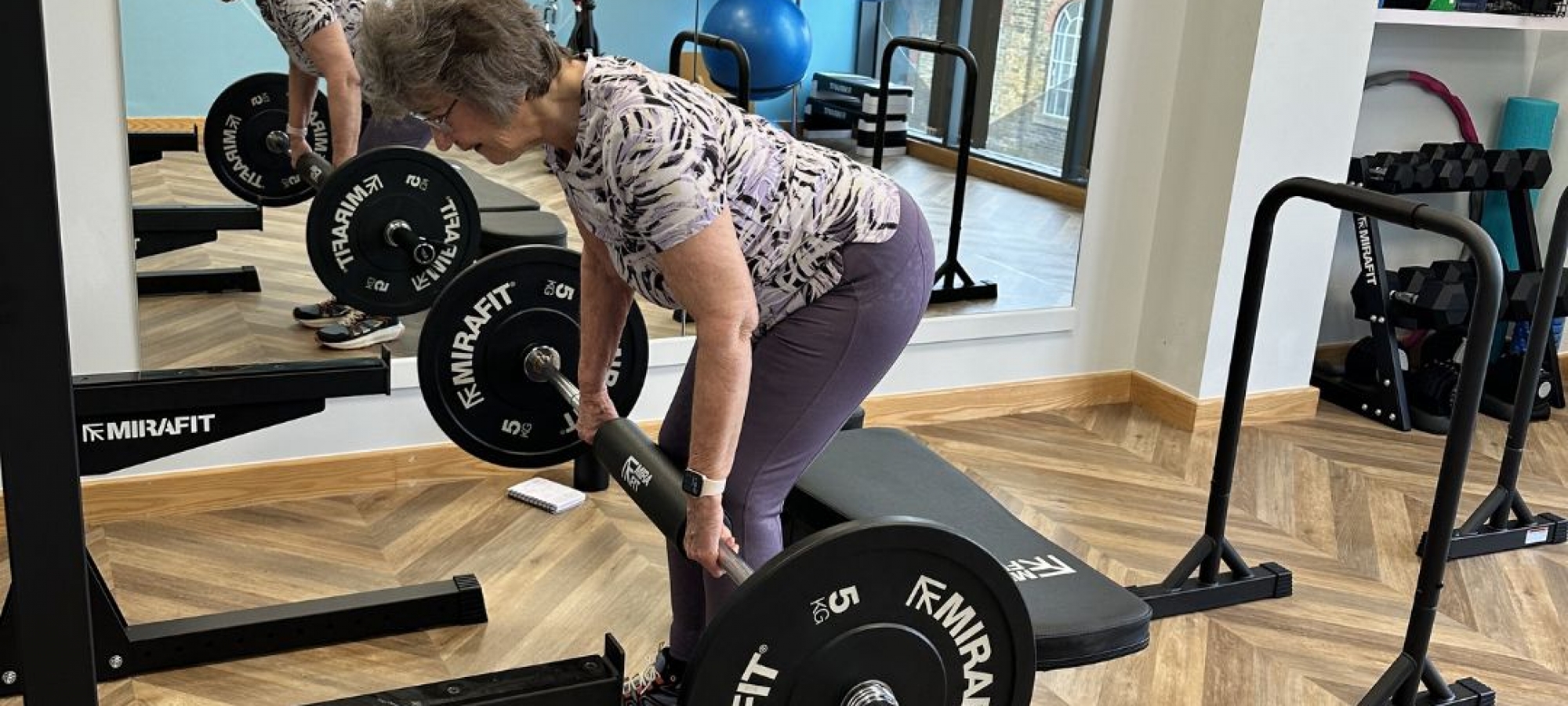
Strength can be built at any age. We’ve worked with people in their 60s, 70s, 80s and beyond who have improved their strength, balance and confidence significantly. The body remains adaptable. Muscles respond to challenge. The nervous system learns.
What changes is not your ability to improve but the importance of how you train. This is where a physiotherapy-led approach becomes so valuable. It’s not about pushing hard for the sake of it. It’s about training safely, progressively and with purpose.
So if you’re wondering whether it’s too late to build strength…It isn’t. The better question is: What might change if you started now?
More Than Physical: Strength, Confidence and Mental Wellbeing
There’s another side to strength that often gets overlooked. How it makes you feel.
During Mental Health Awareness Week in May, there’s often a focus on mindset, stress and emotional wellbeing and rightly so. Physical strength plays a much bigger role in mental health than many people realise. When you feel physically capable, everything changes.
- You worry less about falling.
- You second-guess yourself less.
- You feel more in control.
And that confidence carries into everyday life. We see it all the time.
Clients who initially come in feeling cautious, even anxious about movement… and over time, become more relaxed, more positive, more willing to try things they had been avoiding.
It’s not just that their body has changed, their relationship with their body has changed.
They trust it again.
Training for Life, Not Just Exercise
In May, many people are starting to think about holidays. Walking trips. Exploring new places. Spending active time with family this is where training becomes more meaningful. It’s not about exercise for the sake of it. It’s about what that exercise allows you to do.
- Climbing steps without needing a break.
- Walking on uneven ground without hesitation.
- Carrying luggage without worrying about your back.
- Keeping up with grandchildren in the park.
These are the real outcomes of consistent strength training. We encourage clients to think beyond the session itself.
What do you want your body to do for you this summer?
And what do you want it to still be able to do in 10 years’ time?
That’s what we’re really training for.
A Long-Term Perspective: What Progress Actually Looks Like
A challenge with strength training is expecting quick results. While you can feel better within weeks, the most meaningful changes happen over months and years. We’ve seen clients who started with simple goals - feeling steadier, reducing aches, improving mobility - over time, those small improvements compound.
They move more. They feel stronger. They become more active.
That consistency builds resilience.
The people who age well are rarely the ones who did something intense for a short period. They’re the ones who kept showing up.
Who adapted when life changed. Who rebuilt when setbacks happened. Who shifted from “fixing” to “maintaining.”
This approach creates long-term transformation.
From “Fix Me” to “Keep Me Strong”
If March was about rebuilding and April was about protecting your independence…Then May is about something bigger.
It’s about deciding that your health isn’t something you dip in and out of. It’s something you invest in consistently.
A mindset shift from “fix me” to “keep me strong” is where everything changes. You stop waiting for something to go wrong before taking action. You start building a body that can handle life as it comes and you get longevity.
What’s the Best Exercise for Healthy Ageing?
The honest answer is:
The best exercise is the one that builds strength, supports balance, and is done consistently.
For most people, that means a combination of:
Strength training (to maintain muscle and joint support)
Balance and coordination work (to reduce fall risk and improve reaction times)
Cardiovascular activity like walking (for heart health and enjoyment)
Above all, it needs to be appropriate for you. Your body. Your history. Your goals. That’s why we don’t deliver generic programmes. Our team design guided, structured, physiotherapy-led training that meets you where you are and helps you move forward safely.
Your Next Step
If you’ve been following along over the past few months, you might recognise where you are in this journey.
You might be rebuilding after time off.
You might be working on balance and confidence.
Or you might be ready to think longer term about staying strong for the years ahead.
Wherever you are, the next step doesn’t need to be overwhelming. You can start by coming along to one of our monthly coffee mornings. Meet the team. Talk to other clients. See how we work. Or, if you’re ready, book a visit with one of our Physiotherapists. We’ll guide you through what your next phase should look like, whether that’s physiotherapy, rehabilitation or ongoing strength training.
This isn’t about quick fixes. It’s about building a body that supports the life you want to live; this summer, next year, and for many years to come. You’re not just training for now. You’re training for the next 10–20 years.
And that’s worth investing in.